
An essential part of many B2B leaders’ business activity is consistent work on LinkedIn to build their brand and attract high-value clients.
Publishing quality content is only half the job. The other half is about engaging an audience and developing a network of professional contacts. This article is devoted to this part.
Below, you can get acquainted with the daily work system used by our clients (Founders of B2B technology companies) on LinkedIn. This system allowed many of them to build a flow of incoming requests from potential clients within three to four months.
Day Program on LinkedIn (60 minutes)

It is recommended to perform the Program 4-5 times a week (on weekdays). The minimum frequency is three days a week.

Recommended session time is 10.00 GMT-5.

1. Thought leaders

✔ Go to LinkedIn notifications.

✔ Read the latest posts of your 10-15 Thought Leaders (bells on).

✔ Do like their posts.

✔ Put 3-5 meaningful comments under leaders' posts.

✔ If possible, continue the discussion in the comments.

✔ In addition to leaders, you should also support friends and colleagues with likes and comments.

<< Do it in advance. Select 10-15 Thought leaders in the niche and enable BELL in their profile. >>

2. Post

✔ Publish your current post.

✔ Reply to all comments received within the first hour.

3. Target lists

✔ Go to LinkedIn Sales Navigator and open your filter with the target audience.

✔ Select the next 20 people.

✔ For everyone - look at the latest post, like it, and try to comment.

✔ For each - send a connection request (without a message).

<< Do it in advance. Create a target audience filter in LinkedIn Sales Navigator. >>

4. Other

✔ Check past missed comments under your posts and respond to them.

✔ Check incoming connection requests and accept requests from worthy people.

5. Direct messages

It is recommended to send DMs only if there is a “signal of intent” on the part of the target person or his company. When a signal appears, you can send a personalized message offering your product/services and a mandatory mention of the signal.

<< Do it in advance. Formulate a list of intention signals. >>
As you may have noticed, we must prepare three components before running our system. We’ll discuss this prep work using one of our clients as an example. This company automates business processes in Microsoft Cloud for medium-sized companies in the USA.
Favorite thought leaders
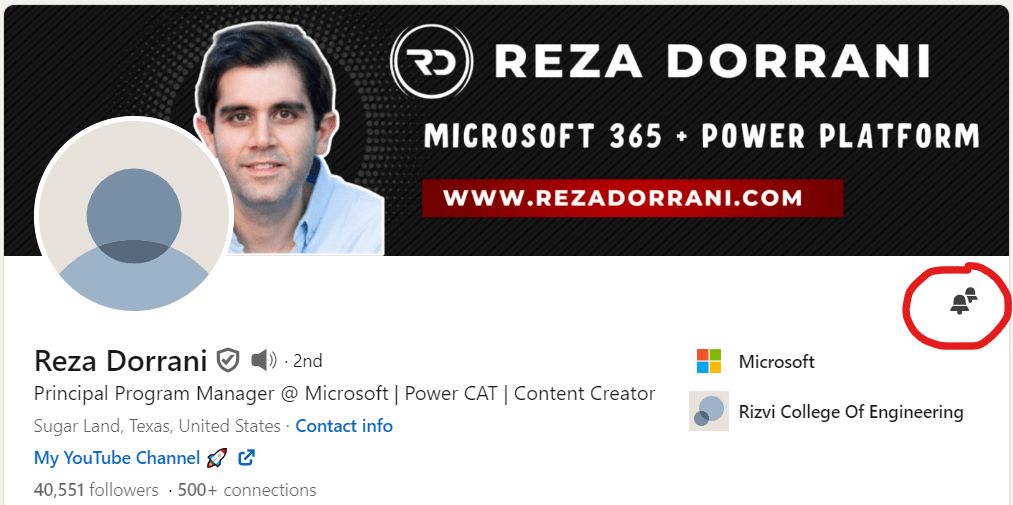
LinkedIn has an excellent option for turning on a bell on a person’s profile to be notified of all their posts (see screenshot).
You should choose 10-15 profiles that interest your audience and you personally. These could be vendor employees, ambassadors of a specific technology, or authoritative users. Note that relevance is more important than the number of followers when choosing a leader.
Next, you read and comment on your favorite experts often. They will answer you. Over time, you develop relationships, communicate in direct messages, and possibly do podcasts and live.
What does this give?
1) You learn how to create content and grow an audience from the leader.
2) If you do everything right, their audience partially becomes yours.
3) Sometimes, a successful comment under an influencer’s post can be more impactful than a dozen of your posts.
Target list in Sales Navigator
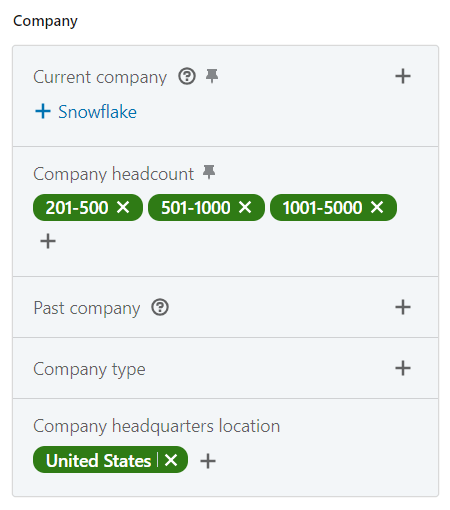
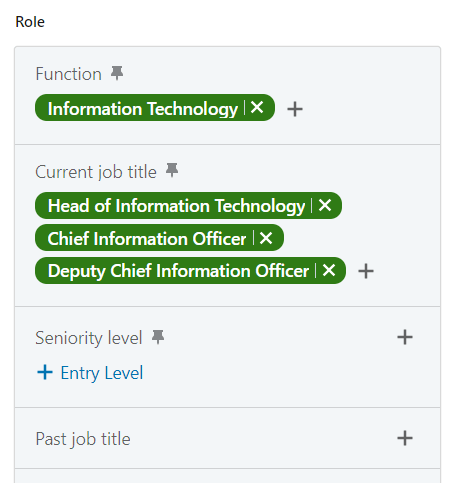
A filter for finding the target audience in our example with a business process automation company might look like this.
Intent signals
Signals in our example with a business process automation company might look like this:
- The CIO mentioned in the post some technologies we work with
- The company is hiring a CIO or IT manager
- CIO took up a position in the new company
- Other
Searching for signals of intent is a function that can and should be automated. There are professionals in the market who use advanced tools to solve this task. You can outsource the work with signals.
Thanks
We hope this staff will help you strengthen your authority on LinkedIn and achieve your business goals.
And remember the basic principles:
- Be consistent
- Share and educate
- Add in discussions
- Support others
- Build relationships
 Albert Sungatullin