
First, let’s figure out if there is a funnel.
The audience awareness funnel is always there. This is a fundamental concept that applies to people, not technology.
TOF (top-of-funnel)
The person has not yet thought about the problem or is unaware of your solution.
(50-100% target audience)
MOF (middle-of-funnel)
The person knows about your product and competitors’ products.
(0-50% target audience)
BOF (bottom-of-funnel)
The person compares products or makes a purchase decision.
(1-5% of the target audience)
What is the problem with acquiring clients from the funnel?
Today, technology has allowed your client to consume a lot of information on the fly. The client can learn almost everything about your product on social platforms and from other community users.
B2B marketers have almost completely lost the ability to track a client’s progress through the awareness funnel.
As a result, the emergence of clients’ buying intent looks unpredictable.
One client can get all the information they need in ChatGPT five minutes before purchase.
The other person will decide based on information received a year ago from an expert at LinkedIn.
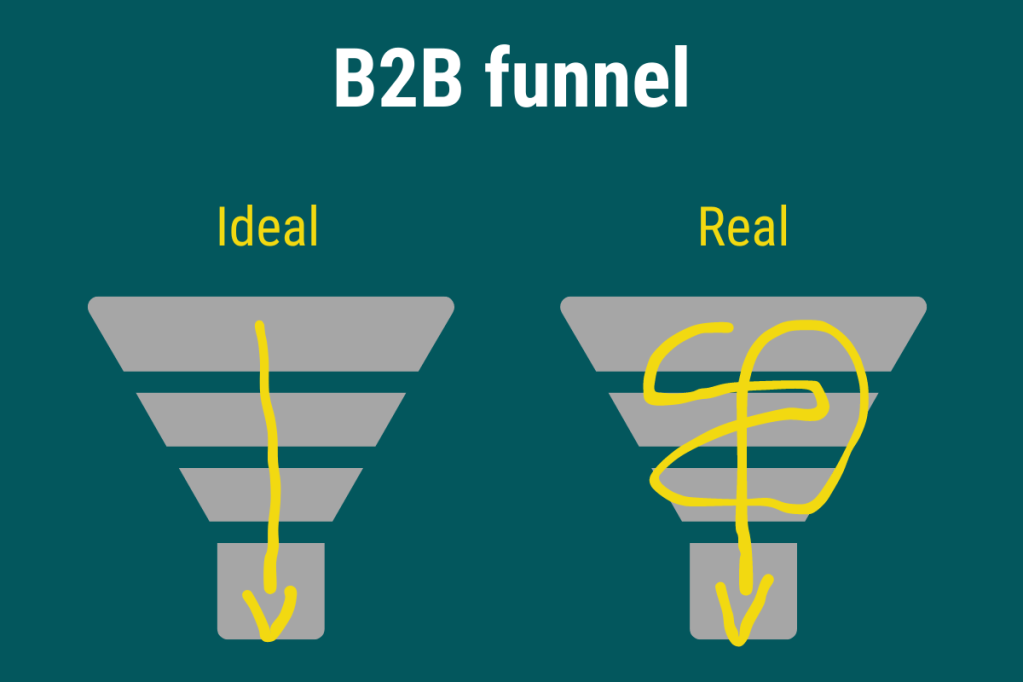
How to work with this “dark funnel”?
As mentioned above, we do not know where today’s leads are.
And we don’t know where tomorrow’s leads are.
We must work with the entire target audience.
We need marketing activities across the funnel!
And not only in advertising.
Blog Articles —> TOF, MOF, BOF.
Social media posts —> TOF, MOF, BOF.
Advertising —> TOF, MOF, BOF.
(❗) B2B brand marketing and advertising must continuously deliver the right information to all funnel levels.
How to build a funnel in B2B advertising?
1) BOF/MOF – Google Search Ads to capture demand, drive quality traffic to your website, and generate leads.
(30-70% of the advertising budget)
2) BOF/MOF – Remarketing for active website visitors on Google, YouTube, Facebook, and LinkedIn. Content delivery. Delivering offers and getting leads.
(20-40% of the advertising budget)
3) MOF/TOF – Active search for potential clients on YouTube, Facebook, and LinkedIn. Content delivery.
(10-50% of the advertising budget)
Is this structure suitable for any B2B?
The advertising strategy itself is versatile.
The implementation of the strategy is individual for a particular business:
– coverage of semantics in the search
– content type and remarketing creatives
– platforms/tools for finding potential clients
– advertising funnel width
– the balance of campaign budgets inside the funnel
– other
Such an advertising funnel can be built even with a small budget.
Do you know how this can work for your B2B?
Ask us how to build a paid acquisition system for your business.
 Albert Sungatullin